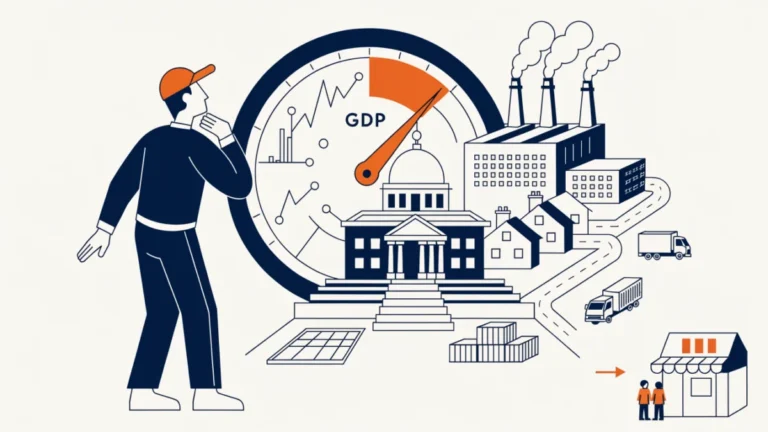

Microeconomics matters because it explains how prices are set, guides business decisions, explains wages and other factor prices, helps design taxes, shows how markets allocate resources, identifies market failures, supports welfare analysis and underpins macroeconomics. Its limits: it ignores the economy as a whole, falls into the fallacy of composition, relies on unrealistic assumptions, uses partial equilibrium and has limited use for national policy.
Why did onion prices in India jump past ₹100 a kilo in late 2019? Why does Apple charge more for an iPhone in India than in the US? Why do airlines charge different fares for the same seat? These are microeconomic questions. Microeconomics studies how individual consumers, firms and industries make choices, and how prices come out of those choices.
Here is why the subject matters, and where its tools fall short. For the branches and methods of the subject, see the types of microeconomics.
Importance of Microeconomics
1. Explains How Prices Are Set
The demand and supply model shows why prices of goods and services rise and fall. The 2019 onion spike came from unseasonal rain cutting supply while demand stayed steady.
2. Guides Business Decisions
Firms use cost curves, demand elasticity and market structure to decide prices, output and whether to enter a market. This is the base of managerial economics.
3. Explains Factor Prices
It shows how wages, rent, interest and profit are determined, which helps explain why some jobs pay more than others.
4. Helps Design Tax Policy
Elasticity tells the government who really bears a tax. A tax on a product with inelastic demand, such as cigarettes, mostly falls on buyers and raises steady revenue.
5. Shows How Markets Allocate Resources
It explains how millions of separate choices decide what gets produced and for whom, without central direction.
6. Identifies Market Failures
Monopoly, pollution and missing information are studied here, and the tools point to fixes such as competition law or a carbon tax.
7. Supports Welfare Analysis
Concepts like consumer surplus let policymakers judge whether a subsidy or price cap makes people better off.
8. Underpins Macroeconomics
Aggregate demand and supply are built from individual decisions, so macro models rest on micro foundations.
Limitations of Microeconomics
1. Ignores the Economy as a Whole
It cannot explain inflation, unemployment or recessions. Those need macroeconomics.
2. Fallacy of Composition
What is true for one unit may be false for all. One person saving more becomes richer; if everyone saves more at once, demand falls and incomes can shrink (the paradox of thrift).
3. Unrealistic Assumptions
Many models assume full employment, perfect information and rational behaviour. Behavioural economists such as Daniel Kahneman and Richard Thaler showed that real people often do not behave this way.
4. Partial Equilibrium
It usually studies one market while holding others constant, which can mislead when markets are closely linked.
5. Limited Use for National Policy
Questions about growth, money supply or the balance of payments fall outside its scope.
Micro vs Macro in One Table
| Point | Microeconomics | Macroeconomics |
|---|---|---|
| Studies | Individual units | The whole economy |
| Key questions | Prices, output of a firm, wages | GDP, inflation, unemployment |
| Main tool | Demand and supply of a good | Aggregate demand and supply |
| Example | Price of onions | Inflation rate |