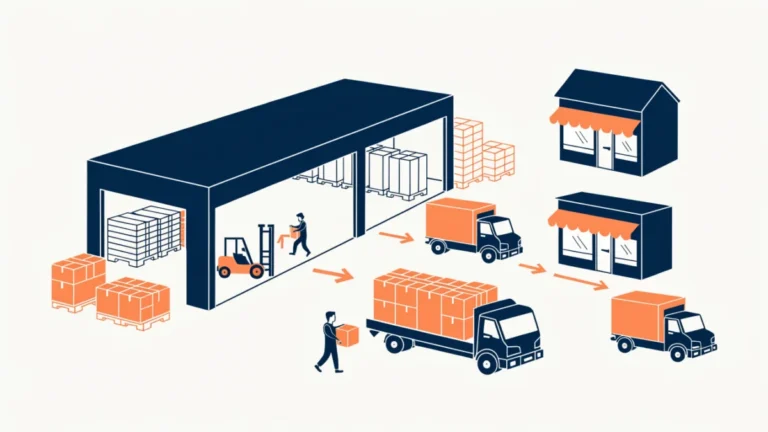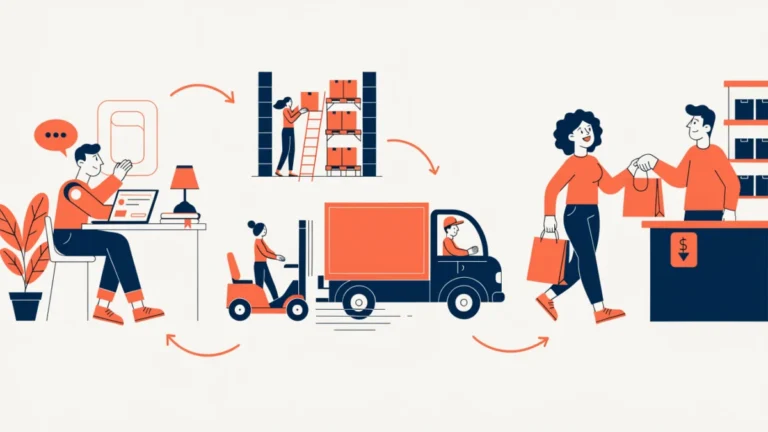
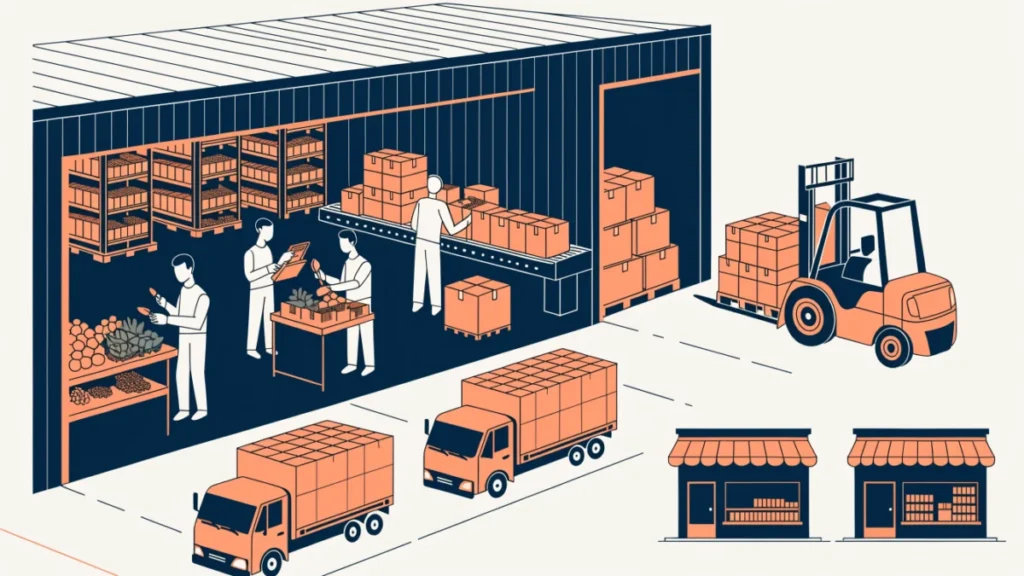
Wholesalers assemble and buy goods, break bulk, store, transport, finance the chain through prompt payment and credit, bear risk, grade and pack, stabilise prices, share market information, sell and distribute to retailers and support new products. They serve manufacturers with bulk orders, reach and feedback, and serve retailers with nearby stock, credit, choice and regular delivery.
A soap factory makes lakhs of bars a day. A village shop sells a few dozen a week. The wholesaler sits between them, buying by the truckload and selling by the carton, and in doing so performs a set of jobs that someone in the chain has to do. In India, these jobs are often split between company-appointed distributors, independent wholesalers and, increasingly, B2B apps.
Here are the main functions wholesalers perform, and the specific services they provide to manufacturers and retailers. For the debate on cutting them out, see arguments for and against eliminating wholesalers.
11 Functions of Wholesalers
1. Assembling and Buying
They buy from many manufacturers and bring a wide range of goods together in one place.
2. Breaking Bulk
They buy in large lots and sell in smaller quantities that retailers can afford.
3. Warehousing
They store goods until retailers need them, smoothing out the gap between production and sale.
4. Transport
They move goods from factories to their godowns and on to retailers.
5. Financing
They pay manufacturers promptly and give retailers credit, often 7 to 30 days.
6. Risk-Bearing
They bear the risk of price falls, damage, theft and goods that do not sell.
7. Grading and Packing
They sort goods by quality and repack them into convenient sizes, especially for farm produce.
8. Price Stabilisation
By storing goods when supply is high and releasing them when it is low, they even out price swings.
9. Market Information
They pass on information about demand, competition and retailer feedback to manufacturers.
10. Selling and Distribution
Their sales teams take orders from hundreds of shops and deliver regularly.
11. Supporting New Products
Good wholesalers introduce new products to retailers and push them on the shelf.
Services to Manufacturers and Retailers
| To manufacturers | To retailers |
|---|---|
| Bulk orders and quick payment | Ready stock nearby; no need to hold large inventory |
| Storage and distribution | Credit facilities |
| Reach into small towns and villages | Wide choice from many brands in one place |
| Market feedback | Information on new products and trends |
| Lower selling cost | Regular delivery and help with display |
How the Role Is Changing
B2B platforms such as Udaan and Jumbotail, and manufacturer apps that let kiranas order directly, are digitising wholesale. The functions stay the same; who performs them, and how efficiently, is what is changing. See the types of wholesalers.