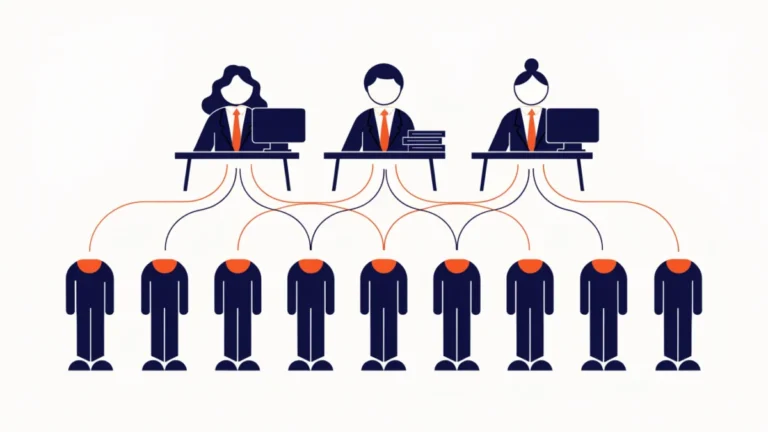

Marketing has grown from simply moving goods from producer to consumer into a customer-focused management process. Its nature can be understood through several approaches: distribution, commodity, institutional, functional, managerial, societal, systems and consumer-satisfaction approaches. Its scope covers products, pricing, distribution, promotion, research and building long-term customer relationships.
There was a time when marketing activity was concerned only with the flow of goods and services from the producer to the consumer. Hence, those business activities which were involved in the movement of goods and services from the producer to the consumer were included in marketing.
The marketing is developmental and dynamic in nature. The marketer should adjust its entire marketing operations according to the changed consumer behavior.
In other words, marketing was concerned with the distribution of goods and services only.
However, this concept of marketing has now been changed. Actually, marketing begins even before the start of production and ends after the satisfaction of the consumer.
What is Nature and Future Scope of Marketing Management
The nature and scope of marketing can be done under the following points.
1. Distribution Of Goods and Services Approach
According to this approach, marketing includes all those activities which are involved in the flow of goods and services from producer to consumer in the process of distribution.
Businessmen prefer the marketing process to the distribution process.
2. Event Approach
It is a new field in marketing in which marketers provide help in launching a new product or conducting the company’s anniversaries function.
Here marketer promotes time-based events and works out the details of an event and makes sure it comes off perfectly.
3. Commodity Approach
This approach studies marketing on a commodity wise basis, such as sugar, tea, wheat, automobiles, fabrics, etc.
The marketing situation of each product is studied as regards the sources and conditions of supply, nature, and extent of demand, the distribution channel used, and the functions, such as buying, selling, advertising, financing, storage, etc., performed by the various agencies.
Under this approach, the commodity serves as a focus around which other aspects of marketing are studied.
By repeating such studies in the case of different commodities one gets the complete picture of the entire field of marketing.
4. Organizations Approach
Usually, organizations are actively engaged in building a strong, favorable image in the minds of their target public, and spend a lot of money on corporate identity advertisements.
For example, reliance industries Ltd. in INDIA has used marketing to boost its public images and to compete for audiences and funds.
5. Functional Approach
In the functional approach, the focus of the marketing study is on different kinds of functions that are recognized for their repetitive occurrences and are necessarily performed to consummate market transactions.

Though there is no unanimity about the number and nature of functions that constitute marketing, nevertheless, some functions recognized are buying, selling, storage, transportation, financing, standardization, grading, risk-taking, marketing research, etc.
6. Managerial Approach
In the managerial approach, the focus of marketing is on the decision-making process involved in the performance of marketing functions.
The Basis of this approach is that marketing is purely a management function.
The managerial approach entails the study of marketing at the micro level-level of business firm of the managerial functions, such as planning, organization, execution, coordination, control, etc. It is a wider approach.
7. Societal Approach
In the societal approach, the entire marketing process is regarded not as a means by which business meets the needs of consumers but as a means by which society meets its own consumption needs.
In it, the focus of the study is the interaction between the various ecological factors, such as cultural, political, sociological, legal, and marketing decisions, and their impact on the well-being of the society.
It is a wider approach as compared to previous approaches as is the recent origin approach.
8. Systems Approach
Among the recent approaches to the study of marketing, the one that has been engaging considerable attention lately is the systems approach.
This approach recognizes the interrelations and interconnections among the components of a marketing system in which products, services, money, equipment, information, etc., flow from marketers to consumers.
Their flows largely determine the survival and growth capacities of a firm.
Thus, the focus of the systems approach is the analysis of the marketing flow and communications from marketers to consumers.
9. Person Approach
Today celebrity marketing has become a major business in which a business firm engages a famous film star or personality for publicity or becoming a brand ambassador for its products.
10. Consumer Satisfaction Approach
In the consumer satisfaction approach, the focus of marketing is on the satisfaction of the consumer.
Marketing is related to the needs of consumers.
Only such products are brought forward which can satisfy the demand of the consumers.
Marketing activities are directly concerned with demand simulating and demand fulfilling efforts of the businessmen.
From the above study, it is evident that the scope of marketing is very wide.
All those activities relating the conception of the idea of production to the satisfaction of the consumers are included in the marketing.
11. Informational Approach
Information can be produced and marketed as a product.
It tells someone something which he did not know previously.
Most of the famous colleges, universities, and schools provide (produce and market) information in their prospectus, on the basis of this information students decide in which school or college they should take admission.
What is the nature and scope of marketing?
The marketing is developmental and dynamic in nature. The marketer should adjust its entire marketing operations according to the changed consumer behavior.
Recommended for You:
- What is sales planning and forecasting
- What are the example of consumer oriented sales promotion techniques
- How to Write a Powerful Advertising Copy
- How long does it take to become a good salesman